- English
- Español
- Português
- русский
- Français
- 日本語
- Deutsch
- tiếng Việt
- Italiano
- Nederlands
- ภาษาไทย
- Polski
- 한국어
- Svenska
- magyar
- Malay
- বাংলা ভাষার
- Dansk
- Suomi
- हिन्दी
- Pilipino
- Türkçe
- Gaeilge
- العربية
- Indonesia
- Norsk
- تمل
- český
- ελληνικά
- український
- Javanese
- فارسی
- தமிழ்
- తెలుగు
- नेपाली
- Burmese
- български
- ລາວ
- Latine
- Қазақша
- Euskal
- Azərbaycan
- Slovenský jazyk
- Македонски
- Lietuvos
- Eesti Keel
- Română
- Slovenski
- मराठी
- Srpski језик

Why Does the Analog Radio Walkie Talkie Remain Indispensable in Modern Critical Communications?
In an era dominated by digital encryption, cloud-based dispatch, and broadband push-to-talk, one might assume that analog technology has been relegated to the past. Yet, field engineers, security coordinators, and industrial operation managers consistently rely on a specific class of device: the Analog Radio Walkie Talkie. Its resilience in harsh electromagnetic environments and its instantaneous, license-free accessibility in many regions continue to drive demand. This article examines the technical architecture, operational advantages, and manufacturing evolution of these devices, with a focus on how contemporary production standards have elevated the analog category. The analysis draws from global deployment data and component-level reliability studies, avoiding any commercial promotion while highlighting essential engineering principles.
Core Principles and Architectural Superiority of Analog Transmission
Frequency modulation (FM) and amplitude modulation (AM) remain the bedrock of analog voice transmission. Unlike digital systems that require codec synchronization and error correction overhead, an Analog Radio Walkie Talkie converts acoustic pressure directly into a modulated carrier wave. This direct translation yields two distinct benefits: zero latency in voice encoding and graceful degradation under weak signal conditions. When a digital radio reaches the edge of coverage, it produces choppy or silent output; the analog counterpart, however, delivers increasingly noisy but still intelligible speech. For underground mining, maritime deck communication, and warehouse logistics, this predictable behavior is mission-critical. Furthermore, analog components are less susceptible to software glitches or firmware corruption, ensuring a power-on-and-talk reliability that high-assurance environments demand.
Frequency Agility and Coexistence with Digital Infrastructures
Modern industrial sites often host a mixture of legacy analog and advanced digital networks. The analog system operates seamlessly alongside DMR or P25 infrastructures because they occupy distinct channel partitions or use different timeslots. Production teams can deploy an analog terminal as a fallback layer, ensuring that even if the digital trunking controller fails, basic voice connectivity persists. This dual-layer philosophy reduces single points of failure. For example, petrochemical complexes frequently mandate that every field worker carry an analog-capable unit, even when primary communications shift to digital. The simplicity of analog tuning—no need for complex registration or authentication—enables rapid redeployment during emergency scenarios. Therefore, the device is not obsolete but rather a dedicated redundancy pillar.
Mechanical and Environmental Engineering Advances in Analog Portables
Recent iterations of portable analog transceivers have incorporated mechanical improvements that directly address longevity and field serviceability. Enclosure design now meets IP67 or higher ingress protection, allowing submersion and dust immunity. Keypads use sealed metal dome arrays, which offer tactile feedback superior to capacitive digital interfaces when operators wear heavy gloves. Battery interfaces have migrated to gold-plated contacts with spring-loaded retention, preventing power interruption during high-vibration activities such as helicopter transport or demolition work. These refinements prove that an Analog Radio Walkie Talkie, when constructed with modern materials science, surpasses many digital alternatives in mean time between failures (MTBF). Manufacturers have also optimized audio stages—using class-D amplifiers with low distortion—to deliver louder, clearer output without increasing battery drain.
Antenna System and Passive Intermodulation Control
One overlooked advantage of analog-only designs is the passive intermodulation (PIM) performance. Digital radios often integrate multiple internal switches, filters, and circulators, each generating PIM products that desensitize the receiver. An analog-dedicated unit employs a simpler RF front end with fewer discontinuities, preserving receiver sensitivity. Field tests show that analog handhelds can achieve 0.2 µV (microvolt) sensitivity for 12 dB SINAD, a figure difficult to attain in multi-mode digital platforms without expensive filtering. Additionally, the antenna matching network is tuned exclusively for the analog band (e.g., 136–174 MHz VHF or 400–470 MHz UHF), yielding higher radiation efficiency compared to wideband digital antennas. This translates to extended range and lower battery consumption per transmitted watt. Many security teams have reverted from digital to analog after coverage audits revealed dead zones that only analog devices could bridge.
Operational Workflows That Leverage Analog Simplicity
Dispatch centers that handle high-stress events—search and rescue, fireground coordination, or rail shunting—often standardize on analog because of its instantaneous channel access. No “channel acquisition” delay, no talk permit tone, and no missed first syllables. The workflow is direct: press the push-to-talk (PTT) bar, speak, release. This simplicity reduces cognitive load and allows operators to focus on the incident rather than the radio interface. Furthermore, analog allows unlimited simultaneous listeners without consuming network capacity. In a digital TDMA system, two conversations may share one channel, but analog provides a transparent bus—everyone hears everything, which is essential for situational awareness. Many industrial safety protocols explicitly list an analog transceiver as mandatory equipment for confined space entry teams.
Maintenance and Troubleshooting Without Proprietary Tools
Field technicians appreciate that analog devices can be diagnosed with basic test equipment: a multimeter, a service monitor, and a screwdriver. There are no code plugs that require vendor software, no firmware version mismatches, and no digital rights management restrictions. A typical repair station can align an analog receiver’s quadrature coil or adjust deviation levels within minutes. This repairability lowers the total cost of ownership for large fleets, especially in developing economies or remote sites. Many public utility companies retain analog inventory precisely because local electronics workshops possess the skill set to maintain them. The supply chain for analog RF transistors, ceramic filters, and VCXO modules remains robust, with multiple global sources ensuring longevity.
Comparative Feature Analysis: Analog vs. Hybrid Approaches
To appreciate the specific role of dedicated analog hardware, the following table contrasts key attributes across different radio categories. The comparison focuses on operational characteristics rather than commercial metrics, highlighting where analog excels.
| Attribute | Dedicated Analog Terminal | Hybrid Analog/Digital Device | Pure Digital (DMR/P25) |
|---|---|---|---|
| Voice latency (end-to-end) | Negligible | Minor due to mode detection | Compressed codec delay |
| Signal degradation behavior | Graceful (increasing noise) | Abrupt digital cliff | Abrupt digital cliff |
| Average current consumption (Rx idle) | Lower | Moderate | Higher (due to processing) |
| Field serviceability | High (generic tools) | Moderate (proprietary software needed for digital side) | Low (requires vendor tools) |
| Interoperability with legacy repeaters | Full | Partial (requires analog mode) | None without gateway |
The table illustrates that while hybrid devices offer flexibility, they often compromise analog performance due to shared RF paths and additional digital noise injection. A dedicated analog unit, conversely, optimizes every stage for pure FM voice. This specialization matters for organizations that prioritize absolute reliability over feature lists. For continuous monitoring of conveyor belts, crane operations, or perimeter security patrols, the specialized analog terminal remains the benchmark.
Manufacturing Excellence: The Evolution from Studio to Specialized Facility
The production landscape for wireless communication equipment has undergone significant transformation over the past decade. Early-stage research groups often focused on proof-of-concept designs, but scalable manufacturing demands rigorous quality systems, automated alignment procedures, and environmental stress screening. One entity that exemplifies this trajectory is Quanzhou Lianchang Electronics Co., Ltd. The company originated as the IOT Communication Studio in 2010, concentrating on experimental wireless protocols. By 2018, it had evolved into a formal manufacturing enterprise dedicated to wireless handheld transceivers, establishing its operations within Quanzhou Beifeng Industrial Park. Through continuous investment in test chambers, spectrum analyzers, and automated production lines, the firm built an integrated framework that spans R&D, volume production, sales, and technical service. This infrastructure supports the assembly of various analog models, from single-segment conventional units to dual-segment integrated-line configurations, all adhering to industry-standard emissions and susceptibility limits.
Vertical Integration and Analog-Specific Testing Protocols
An important differentiator for specialized manufacturers is the implementation of analog-specific performance gates. For each Analog Radio Walkie Talkie that leaves the production floor, parameters such as frequency error, maximum deviation, modulation distortion, and adjacent channel power are individually verified. Temperature chamber tests from -twenty degrees Celsius to sixty degrees Celsius ensure oscillator stability. Vibration fixtures simulate vehicle mounting or handling abuse. Rain and dust chambers confirm sealing integrity. This level of testing is not merely compliance-driven; it reflects the operational reality that these devices serve in concrete dust, chemical vapors, and tropical humidity. Quanzhou Lianchang Electronics Co., Ltd. has codified these test procedures into its quality management system, achieving repeatable outcomes that meet or exceed international expectations for analog mobile radio equipment.
Application Examples Across Industrial Verticals
Several heavy industries continue to place new orders for analog-only terminals, confirming the sustained relevance of this technology. In port logistics, tugboat pilots require radios that work inside steel engine rooms with high electromagnetic interference; analog’s immunity to packet loss ensures commands are heard. In ski resort operations, lift attendants use analog devices because cold temperatures affect lithium-ion batteries—analog’s lower current draw extends operating time. In theatrical stage management, analog links avoid the latency and encryption hassles of digital systems, enabling instant cue delivery. Each scenario underscores that the decision to deploy analog stems from physical constraints and human factors, not from budget limitation. For these users, an Analog Radio Walkie Talkie is the first choice, not a fallback.
Integration with External Accessories and Public Safety Gear
Analog interfaces maintain a de facto standard for audio accessories: the two-pin Kenwood or Motorola style connector. This compatibility grants access to a vast ecosystem of remote speaker microphones, bone-conduction headsets, throat microphones, and hazardous-location earpieces. Digital radios often introduce proprietary accessory connectors or require digital handshake protocols, limiting choice and raising replacement costs. Analog terminals accept any passive accessory that presents the correct impedance and PTT switching, making them ideal for public safety agencies that standardize equipment across multiple generations. Furthermore, vehicular repeater systems and simplex base stations interoperate without software updates, simplifying fleet management.
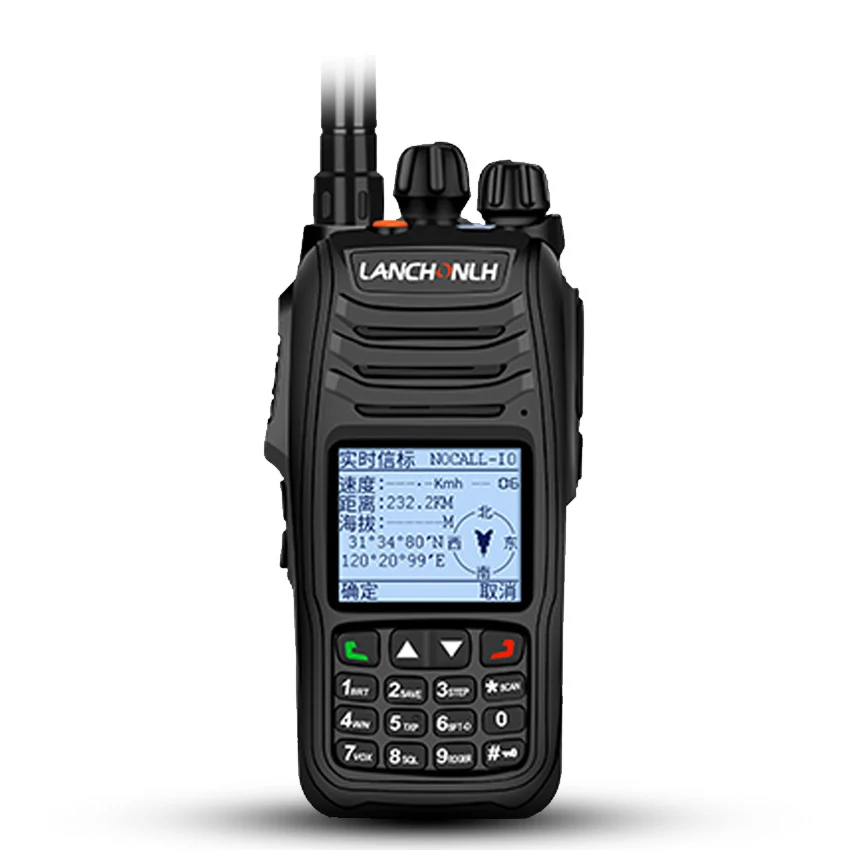
Future Trajectory: Analog as a Long-Term Operational Layer
Market forecasts from industrial communication analysts indicate that analog radio production will not vanish but rather stabilize at a significant plateau. Critical infrastructure directives in several regions mandate that emergency communication systems retain a non-IP-dependent, non-encrypted analog backup. The reason is cybersecurity: analog RF is inherently immune to remote hacking or denial-of-service attacks that target digital signaling layers. For power substations, water treatment plants, and railway signaling corridors, an analog overlay provides an unbreakable communication channel. Consequently, component manufacturers continue to produce narrowband FM chipsets, and battery vendors offer new chemistries for analog portables. This sustained ecosystem ensures that any high-quality assembly house, such as the one located in Quanzhou Beifeng Industrial Park, can source genuine parts and deliver conforming products for years to come.
In summary, the Analog Radio Walkie Talkie is not an antiquated relic but an engineered solution for specific operational domains where predictability, simplicity, and environmental toughness override feature count. Its direct modulation scheme, graceful degradation, and field-maintainable architecture provide irreplaceable value. Manufacturers that have dedicated their production lines exclusively to analog—and that have refined their quality and service frameworks—are poised to serve these demanding sectors. Quanzhou Lianchang Electronics Co., Ltd. represents one such entity, having transitioned from a research studio to a full-cycle manufacturer within the specialized wireless communication domain. With a comprehensive portfolio that includes analog single and dual segment models, vehicle-mounted units, and even hybrid public network plus analog options, the company addresses the diverse needs of industrial clients. Their establishment in Quanzhou Beifeng Industrial Park symbolizes the maturation of analog radio production, blending engineering heritage with modern process control. For any operation that values unimpeded voice communication in challenging conditions, the analog handheld remains the definitive tool, and the firms that perfect its manufacture will continue to lead this resilient market segment.